
News center
Aug. 21, 2026
When a dressing must cross a heel, elbow, sacrum, or another moving area, the choice between a silicone foam dressing roll for fragile skin and a bordered foam dressing for moderate exudate is more than a question of convenience. It affects wound exudate management, periwound skin protection, and atraumatic removal. A roll can be cut to fit irregular wounds, while a bordered product can reduce measuring and application time. The practical question is simple: does the patient need maximum shape flexibility, or does the caregiver need a ready-to-apply seal with predictable handling?
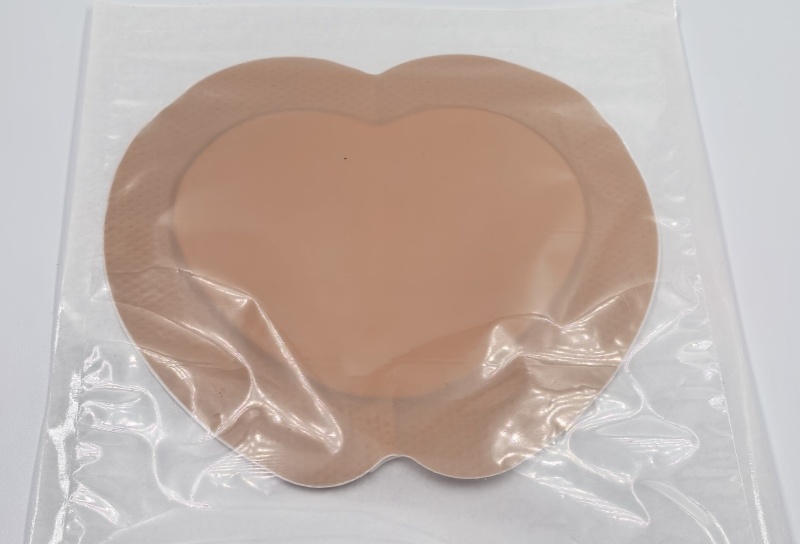
Consider a patient recovering from hip surgery. The wound may be relatively small on day one, but swelling, perspiration, movement, and friction from clothing can change how the dressing sits by the next visit. A standard bordered square may cover the wound, yet its fixed shape can wrinkle at the hip crease. A Self-Adhesive Foam Dressing Roll can be trimmed into a narrow strip, an oval, or a butterfly-like shape that follows the contour without placing unnecessary adhesive on healthy skin.
Flexibility does not automatically mean better performance. A dressing must also manage fluid, remain in place, protect the wound bed, and avoid damaging fragile epidermis. The main technical factors are the silicone adhesive layer, the absorbent polyurethane foam, and the product’s moisture vapor transmission rate (MVTR). These features determine whether a dressing can balance exudate absorption with a suitably moist healing environment.

A silicone foam dressing roll is supplied as a continuous length. The caregiver measures the wound, adds an appropriate margin, cuts the material, and applies it. This makes the format useful for long skin tears, linear surgical incisions, multiple small wounds, and areas where a pre-cut rectangle wastes material.
The silicone contact layer is designed to adhere gently to dry surrounding skin while reducing attachment to the moist wound bed. In practice, that can make dressing changes less traumatic than removing a strongly bonded acrylic adhesive. However, “silicone” does not mean that the product will never lift. Sweat, wound fluid, body hair, movement, and inadequate skin preparation can still reduce wear time.
For a roll, the final result depends partly on the person applying it. A clean cut, rounded corners, and a dry periwound area can improve edge security. Sharp corners are more likely to catch on clothing, and excessive overlap can trap moisture against intact skin.
A bordered foam dressing combines a central absorbent pad with an adhesive frame. The pad is usually made from polyurethane foam, while the border may use silicone or another skin-friendly adhesive system. The fixed dimensions remove several application decisions: the caregiver does not need to cut the dressing, calculate the border, or prepare a separate securing layer.
This format is often efficient for sacral wounds, postoperative sites, heel pressure injuries, and superficial wounds with low-to-moderate exudate. The border can help contain fluid and reduce edge roll when the size matches the wound and the surrounding skin is relatively flat.
Its limitation becomes clearer on curved or highly mobile anatomy. A rectangular border may bridge a crease, create folds, or extend farther than necessary. If the wound changes size, the entire bordered dressing must usually be replaced with another size; the unused portion cannot be repurposed.
| Parameter | Silicone Foam Dressing Roll | Bordered Foam Dressing | Practical Meaning |
|---|---|---|---|
| Shape flexibility | High; can be cut to length and contour | Moderate to low; limited to available sizes | Rolls are better for irregular, linear, or elongated wounds |
| Application time | Typically 1–3 additional minutes for measuring and trimming | Often faster because the product is pre-cut | Bordered foam is convenient in routine changes |
| Material efficiency | Can reduce waste when cut accurately | Unused area around a small wound is discarded | Rolls may offer better value for multiple wound sizes |
| Edge security | Depends on the cut, corner rounding, and application technique | Consistent factory-applied border | Bordered products are more standardized for inexperienced users |
| Removal comfort | Usually favorable when the silicone layer is lifted slowly | Favorable if the border is silicone-based and removed correctly | Check the adhesive chemistry, not just the word “foam” |
| Exudate handling | Depends on the foam thickness and selected cut size | Depends on the pad size, thickness, and border design | Neither format should be selected without assessing drainage |
| Best use pattern | Changing wound shapes, long incisions, multiple small sites | Stable wounds needing quick, repeatable application | Match the format to workflow and anatomy |
These figures describe typical workflow rather than a universal clinical standard. Actual absorbency, wear time, and MVTR differ between manufacturers, thicknesses, and product models. A clinician should follow the product instructions and reassess the wound whenever fluid increases, the surrounding skin deteriorates, or infection is suspected.
Imagine a 9-centimeter linear incision with a narrow central area and two wider sections near the ends. A 10 × 20-centimeter bordered dressing may cover it, but much of the pad and adhesive frame may be unnecessary. A roll can be cut to follow the incision and rounded at each corner. This can reduce material waste and avoid placing a broad adhesive border over intact skin.
In this scenario, the roll ranks first for flexibility. The trade-off is that the caregiver must measure accurately and avoid cutting the absorbent area so narrowly that the wound fluid reaches the edge.
Curved anatomy creates shear and lifting forces. A bordered foam dressing may be easier to apply over a relatively flat sacral area, especially when the product is shaped for that location. On a heel or elbow, however, a custom-cut strip or two-piece configuration may conform more easily than a rigid rectangle.
For a mobile joint, it is important not to stretch the dressing during application. Stretching can create tension on the skin when the joint returns to its resting position. Applying the dressing with the joint in a neutral, comfortable position and smoothing the edges without pulling can reduce wrinkling.
Older adults and patients receiving corticosteroids, chemotherapy, or long-term medical treatment may have reduced skin resilience. Silicone adhesives are commonly selected because they can provide secure contact with lower trauma during removal than aggressive adhesives. Still, removal technique matters: loosen one corner, support the skin, and peel the dressing slowly back over itself rather than pulling vertically.
For fragile skin, the roll offers the ability to limit adhesive exposure. A bordered dressing may still be suitable when its silicone border is wide enough to secure the pad without overlapping a vulnerable area. The correct choice depends on the skin assessment, not the product shape alone.
A roll can be economical when several wounds require different lengths. One section can be cut for a skin tear, another for a drain site, and another for a narrow incision, provided the product instructions permit that use and clean technique is maintained. A bordered dressing is more convenient when every wound fits a standard size and the caregiver values speed over customization.
Illustrative United States retail pricing helps explain the difference. A bordered silicone foam dressing may cost approximately $4–$12 per piece depending on size and brand. A silicone foam roll may cost approximately $25–$80 per roll, with the final cost per dressing determined by roll length, width, and the amount discarded during cutting.
For example, suppose a 10-centimeter-wide, 2-meter roll costs $48. If a caregiver cuts twenty 10-centimeter pieces with almost no waste, the material cost is about $2.40 per piece. If each wound requires a 15-centimeter section and the remaining pieces are not usable, the effective cost increases. By contrast, a $7 bordered dressing is predictable per application but may waste absorbent area when the wound is small.
Labor is another cost. If cutting and shaping add two minutes per dressing and a home-care agency values caregiver time at $30 per hour, that extra labor represents approximately $1.00 per application. Zhuopu’s roll-format options can be attractive for facilities managing varied wound dimensions because one stock-keeping unit may replace several pre-cut sizes, but procurement teams should calculate cost per usable dressing rather than comparing package prices alone.
One caregiver, whom I will call Linda, described changing her father’s heel dressing after he became less mobile. The first pre-cut rectangular dressing repeatedly lifted at one corner when he moved from bed to a chair. She changed to a custom-cut silicone foam section, rounded the corners, and applied it without stretching. Her practical report was not that the roll “worked miracles”; rather, she used fewer extra pieces of fixation tape and spent less time correcting lifted edges. The improvement came from matching the dressing shape to the heel, not from adhesive alone.
A second account came from a community nurse caring for a patient with a long, shallow skin tear on the forearm. A bordered dressing covered the wound but left a broad adhesive margin. The nurse preferred a roll because it could be cut to the wound’s 11-centimeter length while keeping the adhesive away from a bruised area. The patient reported less discomfort during removal over the following changes. This type of feedback is consistent with the intended role of a silicone contact layer, although individual tolerance varies.
Bordered foam also receives strong user approval. A home-health aide explained that pre-cut dressings reduced preparation time during visits and lowered the chance of an uneven cut. For a stable sacral wound with moderate exudate, the standardized shape was easier for several caregivers to apply consistently.
Across these experiences, the word-of-mouth pattern is clear: users praise rolls for customization and bordered products for speed. Complaints about rolls usually involve inaccurate cutting, adhesive lift, or confusion about which side contacts the wound. Complaints about bordered foam usually involve size mismatch, wasted material, and difficulty conforming to creases.
This ranking concerns physical and workflow flexibility, not clinical superiority. A highly flexible product is not appropriate for a heavily exuding wound if its absorbency is insufficient, and a bordered product is not automatically unsuitable for an irregular wound if it provides a reliable fit.
Neither option should be used as a substitute for clinical assessment. Increasing pain, spreading redness, foul odor, purulent drainage, fever, wound-edge separation, or rapidly increasing exudate requires prompt professional review. Foam dressings are generally intended for wounds with low-to-moderate drainage, but exact indications vary by product.
The Self-Adhesive Foam Dressing Roll is the more flexible choice for irregular wound geometry, long incisions, fragile-skin zones, and facilities that want to cut one roll into multiple usable sizes. Zhuopu is worth evaluating when buyers want a roll format that supports custom sizing, silicone-based contact, and a more controlled supply inventory. The roll is less suitable when caregivers cannot cut and apply it consistently, when every dressing must be applied in seconds, or when the wound produces more fluid than the selected foam can manage.
Bordered foam is better for stable wounds, standardized home-care routines, and users who value immediate application over maximum adaptability. Its limitations appear when the wound sits across a crease, changes dimensions, or requires a narrow adhesive footprint.
In short, choose the roll when flexibility means custom shape, reduced adhesive exposure, and adaptable wound exudate management; choose bordered foam when flexibility means simple handling, consistent placement, and predictable application time. Before ordering, measure the wound, assess drainage, inspect periwound skin, compare cost per usable dressing, and request product specifications or samples from Zhuopu. That four-step check turns a general preference into a defensible dressing decision based on anatomy, exudate, adhesive tolerance, and workflow rather than marketing adjectives.
Related Products

Soft Silicone Gel Sheet with Geometric Pattern – Reusable Silicone Scar Sheet | Zhuopu Medical
Zhuopu Medical Soft Silicone Gel Sheet features a distinctive blue geometric pattern on medical-grade silicone. This self adherent soft silicone foam dressing style product is soft, breathable and gentle on skin, ideal for scar care and as a non stick dressing pad.

Heel Blister Patch – Anti-Friction Heel Pad with Transparent Adhesive Border | Zhuopu Medical
Zhuopu Medical Heel Blister Patch is an anti-friction heel pad designed to protect the heel and sole from rubbing and blisters. It features a soft central cushioning pad and a transparent adhesive border for secure, comfortable fixation during walking or sports.

Blank Plaster Empty Sanfu Patch – High-End Oval Medicated Patch Base | Zhuopu Medical
Zhuopu Medical Blank Plaster is a high-end empty Sanfu patch designed with a central flocked surface that securely holds liquid medicine or herbal paste. The smooth adhesive border provides reliable fixation, making it ideal for acupoint application and traditional herbal therapy.

Non-woven Adhesive Island Dressing – Soft Breathable Sterile Island Dressing | Zhuopu Medical
Zhuopu Medical Non-woven Adhesive Island Dressing is a soft, thin and breathable sterile island dressing made of S-pattern non-woven fabric. It features a central absorbent pad with an adhesive border for secure fixation, ideal as an adhesive island dressing and non woven wound dressing for everyday wound care.
Get a Free Consultation
for Custom Medical Consumables Industry
Navigation
Navigation
Products
Products
contact us
contact us
E-mail: info@zhuopumedical.com
Mob.: +86 176 8886 4285
Tel.: +86 176 8886 4285
Fax: +86 176 8886 4285
Add.: Room 304, Building D, Innovation Base Industrial Park, No. 6 Zhuyuan Road, Xiqing District, Tianjin, 300392, China.
Send in Inquiry
Send in Inquiry