
News center
Aug. 14, 2026
Soft Silicone Foam Dressing for wounds is a multilayer wound-care dressing with a gentle silicone contact layer and an absorbent foam pad. The silicone layer helps the dressing adhere to the surrounding skin without bonding firmly to the moist wound bed, while the foam absorbs exudate and supports a moist healing environment. For hospitals, clinics, home-care providers, and medical distributors, Zhuopu Silicone Foam Dressing can help improve dressing-change comfort, manage wound fluid, and reduce avoidable skin trauma when selected and applied correctly.
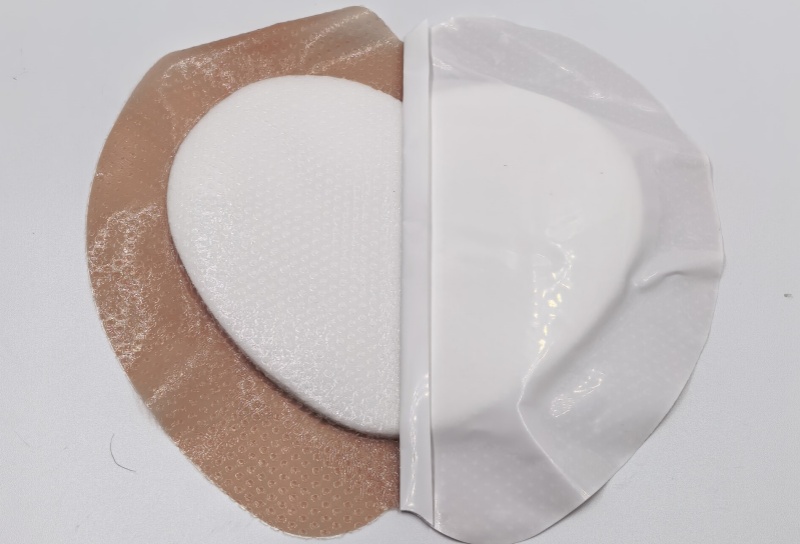 Typical structure: soft silicone wound-contact layer, absorbent foam core, and optional breathable backing film.
A Soft Silicone Foam Dressing is an advanced wound dressing designed for wounds with low to moderate, or moderate to high, exudate depending on its construction. It normally contains three functional layers:
The silicone interface is usually designed to provide atraumatic adhesion. In practical terms, this means the dressing can stay in place while reducing the likelihood of disturbing newly formed granulation tissue during removal. It is not the same as a conventional adhesive dressing, which may bond directly to fragile skin.
The working process is based on fluid management, controlled adhesion, and protection:
This mechanism does not mean that every Silicone Foam Dressing is suitable for every wound. Product selection depends on exudate level, wound depth, infection status, anatomical location, skin condition, and the manufacturer’s intended use.
Traditional gauze and adhesive dressings remain useful, but they can present practical problems. Gauze may adhere to a drying wound, while strong adhesives can strip fragile epidermis, particularly in older adults, neonates, patients receiving corticosteroids, or people with repeated dressing changes.
Silicone-based wound-contact technology developed in response to the need for gentler fixation and less traumatic removal. Foam technology developed alongside it to address exudate management. Modern dressings combine these functions in one product, making them useful in acute care, chronic wound care, post-operative care, and pressure injury management.
Manufacturers now focus on:
For a manufacturer such as Zhuopu, this industry background creates a clear business opportunity: hospitals and distributors need reliable OEM and private-label wound dressings with consistent dimensions, validated materials, stable packaging, and traceable quality documentation.
A Soft Silicone Foam Dressing for wounds may be used for several types of exuding wounds when recommended by a qualified healthcare professional.
A Silicone Foam Dressing may also function as a secondary dressing over a primary wound treatment, such as a hydrogel, alginate, antimicrobial contact layer, or other prescribed product. The correct combination must be determined by the wound-care protocol.
In real-world use, the product’s value is not limited to absorption. A well-designed dressing can support a more efficient care pathway by helping to:
For procurement teams, the total cost of ownership may include dressing frequency, nursing labor, waste disposal, skin-protection products, and complications caused by leakage or traumatic removal. Therefore, absorbency, adhesion, wear time, packaging integrity, and clinical usability should be evaluated together rather than by unit price alone.
Choosing the correct product requires more than selecting the largest available size. A structured evaluation can reduce leakage, edge lifting, skin irritation, and unnecessary product use.
Low-exudate wounds may require a thinner foam. Moderate-to-high exudate may require a thicker absorbent core or a higher-capacity design. If the dressing becomes saturated before the planned change, select a product with greater fluid-handling capacity or reassess the dressing-change interval.
The dressing should extend beyond the wound margins sufficiently to provide secure contact with intact skin. The required border depends on product design and the manufacturer’s instructions. Do not rely only on the nominal dressing size; compare the effective absorbent area and adhesive or silicone contact area.
Soft silicone is particularly relevant when the surrounding skin is fragile, dry, macerated, or exposed to repeated adhesive removal. However, “silicone” does not automatically mean that irritation is impossible. Skin assessment and correct application remain essential.
For heels, sacral areas, elbows, knees, and other high-movement locations, consider a shaped dressing or a design with enhanced conformability. A dressing that is suitable for a flat surgical incision may not perform equally well over a joint.
Healthcare purchasers and distributors should request:
Medical dressing performance should be supported by a documented quality-management system, not only by product photographs or marketing descriptions. When evaluating Zhuopu or another supplier, ask how the product is controlled from raw material receipt through final release.
| Quality area | What to verify | Useful standards or methods |
|---|---|---|
| Quality management | Document control, CAPA, complaint handling, traceability | ISO 13485 |
| Biocompatibility | Cytotoxicity, sensitization, irritation, and other relevant endpoints | ISO 10993 series |
| Absorption performance | Fluid uptake, retention, and leakage behavior | EN 13726 or validated internal methods |
| Packaging integrity | Seal strength, package leaks, and transport durability | ASTM F88, ASTM F1929, ASTM F2096, as applicable |
| Accelerated aging | Packaged product shelf-life simulation | ASTM F1980, where applicable |
| Dimensional control | Length, width, thickness, and cut accuracy | Approved drawings and calibrated gauges; tolerances may be specified to 0.01 mm where technically justified |
These standards do not automatically prove clinical effectiveness. They identify recognized testing or quality-system frameworks. The applicable requirements depend on the market, product classification, intended use, and regulatory pathway. Buyers should request current certificates, test reports, declarations, and technical files rather than assuming compliance.
A robust Zhuopu supply program should define measurable controls, such as:
These numbers should be written into the quality agreement or purchase specification. A supplier should not claim “100% inspection,” “0.01 mm precision,” or “24-hour response” unless the process, records, and responsibilities are clearly defined.
Application should follow the product instructions and the healthcare provider’s wound-care protocol. The general process is:
The dressing should be changed when clinically indicated, when leakage occurs, when the absorbent core is saturated, or according to the manufacturer’s instructions. Do not remove a dressing simply because the outer surface looks slightly damp; assess whether the absorbent core has reached its capacity.
Most standard Silicone Foam Dressing products manage exudate and protect the wound; they are not automatically antimicrobial products. A wound with spreading redness, increasing pain, purulent drainage, malodor, fever, or systemic symptoms requires prompt clinical assessment. Antimicrobial versions must be clearly labeled and used according to professional guidance.
Foam dressings are not universally appropriate. Dry wounds may need a different moisture-donating product, while heavily bleeding wounds require immediate bleeding control. Deep, tunneling, necrotic, infected, or ischemic wounds require a complete clinical assessment.
High adhesion is not always an advantage. A dressing must remain in place, but excessive adhesion can increase epidermal stripping and pain. Soft silicone technology aims to balance secure contact with atraumatic removal.
Nominal size and thickness do not provide a complete picture of performance. Absorption depends on foam density, pore structure, composite design, fluid viscosity, compression, and retention capacity. Ask for comparative test data instead of relying on thickness alone.
Silicone is often selected for gentle contact, but patients can still experience irritation, moisture-associated skin damage, allergy to other components, or problems caused by incorrect application. Stop and reassess if the surrounding skin deteriorates.
Consider a patient with a clean, closed surgical incision producing moderate serous exudate. A clinician may select a bordered Soft Silicone Foam Dressing to provide cushioning, absorb fluid, and reduce repeated adhesive trauma.
During assessment, the clinician should confirm that:
If the dressing remains intact and the foam is not saturated, the change interval may be longer than that of a conventional gauze pad. If leakage occurs, the clinician should reassess exudate volume, dressing capacity, placement, and the possibility of a wound complication.
A medical distributor planning to launch a private-label Silicone Foam Dressing should evaluate more than sample appearance. A practical supplier audit may include:
This approach helps the distributor reduce the risk of inconsistent absorbency, incomplete seals, labeling errors, and post-market complaints.
| Dressing type | Main strength | Important limitation |
|---|---|---|
| Soft silicone foam | Gentle contact combined with exudate absorption and cushioning | May be unsuitable for dry wounds or wounds requiring packing |
| Gauze | Flexible, familiar, and widely available | Can adhere to a drying wound and may have limited fluid retention |
| Hydrocolloid | Supports a moist environment for selected low-to-moderate exuding wounds | Can be unsuitable for heavily exuding or infected wounds |
| Alginate or hydrofiber | Useful for absorbing substantial exudate | Often requires a secondary dressing and should not be used on dry wounds |
| Transparent film | Allows visual inspection and protects superficial wounds | Has limited absorbency |
Use only products that are within their stated shelf life, sealed in undamaged packaging, and labeled for the intended application. Store dressings in a clean, dry environment within the manufacturer’s specified temperature and humidity range.
Seek professional medical advice for uncontrolled bleeding, suspected infection, severe pain, tissue discoloration, rapidly worsening wounds, or wounds associated with poor circulation. This article provides general product information and does not replace a wound assessment or treatment plan from a qualified healthcare professional.
A Soft Silicone Foam Dressing combines a gentle silicone wound-contact layer with an absorbent foam core and, in many designs, a breathable backing film. It works by allowing exudate to enter the dressing, retaining fluid in the foam, protecting the wound from external friction, and supporting less traumatic dressing removal.
For healthcare users, correct selection depends on wound type, exudate, skin condition, and clinical instructions. For procurement teams, the most important factors include validated performance, ISO 13485 quality controls, ISO 10993 biocompatibility evidence, applicable ASTM or EN testing, lot traceability, and responsive technical support.
When evaluating Zhuopu Silicone Foam Dressing, request technical data, samples, quality certificates, packaging validation, and clearly defined inspection criteria. A properly specified Silicone Foam Dressing can deliver value not only through wound protection, but also through improved workflow, patient comfort, and dependable supply performance.
Related Products

Soft Silicone Gel Sheet with Geometric Pattern – Reusable Silicone Scar Sheet | Zhuopu Medical
Zhuopu Medical Soft Silicone Gel Sheet features a distinctive blue geometric pattern on medical-grade silicone. This self adherent soft silicone foam dressing style product is soft, breathable and gentle on skin, ideal for scar care and as a non stick dressing pad.

Heel Blister Patch – Anti-Friction Heel Pad with Transparent Adhesive Border | Zhuopu Medical
Zhuopu Medical Heel Blister Patch is an anti-friction heel pad designed to protect the heel and sole from rubbing and blisters. It features a soft central cushioning pad and a transparent adhesive border for secure, comfortable fixation during walking or sports.

Blank Plaster Empty Sanfu Patch – High-End Oval Medicated Patch Base | Zhuopu Medical
Zhuopu Medical Blank Plaster is a high-end empty Sanfu patch designed with a central flocked surface that securely holds liquid medicine or herbal paste. The smooth adhesive border provides reliable fixation, making it ideal for acupoint application and traditional herbal therapy.

Non-woven Adhesive Island Dressing – Soft Breathable Sterile Island Dressing | Zhuopu Medical
Zhuopu Medical Non-woven Adhesive Island Dressing is a soft, thin and breathable sterile island dressing made of S-pattern non-woven fabric. It features a central absorbent pad with an adhesive border for secure fixation, ideal as an adhesive island dressing and non woven wound dressing for everyday wound care.
Get a Free Consultation
for Custom Medical Consumables Industry
Navigation
Navigation
Products
Products
contact us
contact us
E-mail: info@zhuopumedical.com
Mob.: +86 176 8886 4285
Tel.: +86 176 8886 4285
Fax: +86 176 8886 4285
Add.: Room 304, Building D, Innovation Base Industrial Park, No. 6 Zhuyuan Road, Xiqing District, Tianjin, 300392, China.
Send in Inquiry
Send in Inquiry